
Redefining feminist publishing with Dalva!
Éditions Dalva has emerged as a bold response to gender disparities in publishing. For Co-founders Juliette Ponce and Marie-Anne Lacoma, the imprint is not merely a feminist project but a literary commitment to amplifying women’s perspectives across fiction and nonfiction. In January, they are publishing Chimères tropicales, a novel written by French author Corinne Morel Darleux during her residency in Vagamon with DC Books.
What inspired you to start Éditions Dalva?
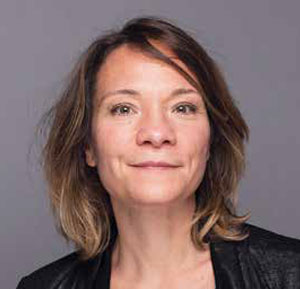
Dalva was born in France in 2021 after the MeToo movement. In 2020, while we were developing this project, Vanessa Springora’s novel, Consent, became the focal point of a societal debate and had such an impact that the law was changed. Several feminist publishing houses emerged, particularly in the field of nonfiction, and we wanted to participate in this collective movement for women. We observed that women were less published, less translated, and less promoted in the media. They received fewer literary prizes… except when readers voted. We felt that the French publishing world was not treating women writers as it should. Dalva was born to challenge this reality.
Our projects also echo a question we both asked ourselves since working in publishing: we are convinced that women’s language is not essentially different from men’s. Nevertheless, the role they embody in our society and in life in general is quite different from men’s, hence a distinct point of view. How can we render such diversity in the narratives we publish? The idea is to discover, through their eyes, another vision of the world and to ensure their side of the story is heard.
Would you call yourself a “feminist publisher”? What challenges did you face?
The Dalva project is resolutely feminist, but it’s essential for us that our authors don’t feel they have to write about feminism to be published by Dalva. In fact, for some of them, feminism isn’t a central theme in their literary work, and that suits us perfectly. Our feminist goal is to promote women! There were critics of course: for some, our position is too feminist and for others, it’s not feminist enough!
You publish 10 titles a year: what is the criterion of selection?
Each year, we publish four novels by French authors, four translated novels, and two essays. That’s very few, so the main criterion is absolute enthusiasm for the book, its language and its story. We are drawn to certain topics, such as the relationship with nature, intergenerational relationships, etc.
How has this selection promoted a cross cultural exchange?

One of Dalva’s goals is to remove the obstacles faced by women writers. These obstacles may be related to the topics they choose and which are not considered as a “woman topic” in our country: we, for instance, publish novels which deal with sports, science, the relationship with nature, etc. But there may be linguistic obstacles as well: we therefore try to translate for as many regions as possible. Our authors come from Asia, Oceania, South America, the US, and European countries. The origin of the novel is not a criterion for us, but the promotion of a literature as diverse as possible remains a goal.
Have you published any work by an Indian author? Also share about Corinne Morel-Darleux’s book that you will be publishing in January.
We haven’t published any work from an Indian writer yet, but we had the opportunity to work on a novel by Indian-origin writer Chetna Maroo, Western lane which explores grief within an immigrated Indian family in England.
Corinne Morel Darleux, a French writer, benefited from a writing residency in Kerala organized by the French Institute in India, where she began working on her new novel. During her stay, the book undertook a radical transformation and became a novel about the power of fiction, inspired by the story of people lost in the heart of the jungle. The rainforest that Corinne had the chance to discover, entered the narration and became a metaphor for dreams and nightmares, an image of what our minds can create.
What role do you see with feminist publishing narratives on a global scale?
To discuss the number of women published, the books they are allowed to write, the prizes they can win, and their presence in the media. We work for equality.
Every country faces its own battle for equality, and publishing can become a powerful vehicle for questioning and disseminating ideas. We firmly believe in the importance of listening to women’s voices.
What do you feel the future of feminist publishing will be?
We dream of a world where feminist publishing gains influence and becomes so mainstream that it can finally completely disappear, where women writers no longer need defending. It’s a utopia, certainly, but we’re working towards it.
Juliette Ponce is a French publisher and translator. She studied social anthropology and philosophy, before starting to work in publishing nearly 25 years ago. From the early 2000 on, she worked for the foreign fiction lists of various French publishing houses – and lived in London for several years. In 2021, she came back to France to launch Les Éditions Dalva, a publishing house dedicated to women writers in fiction and non-fiction. She was joined by Marie-Anne Lacoma who had been working for Editions Gallmeister and for La Manufacture des Livres for many years and combined many skills, from relations with booksellers to marketing to partnerships and publication strategy. Together, they work together to promote contemporary women authors.
Comments are closed.