
Why France Still Believes in Bookstores
Guillaume Husson, Director of the French Bookselling Association (Syndicat de la Librairie Française- SLF), maps the contemporary bookselling landscape in France, examining how bookstores weathered the Covid crisis, adapted to digital realities, and continue to play a vital cultural role amid changing reading habits, sustainability concerns, and the growing influence of artificial intelligence.
What is the landscape of bookstores in France?
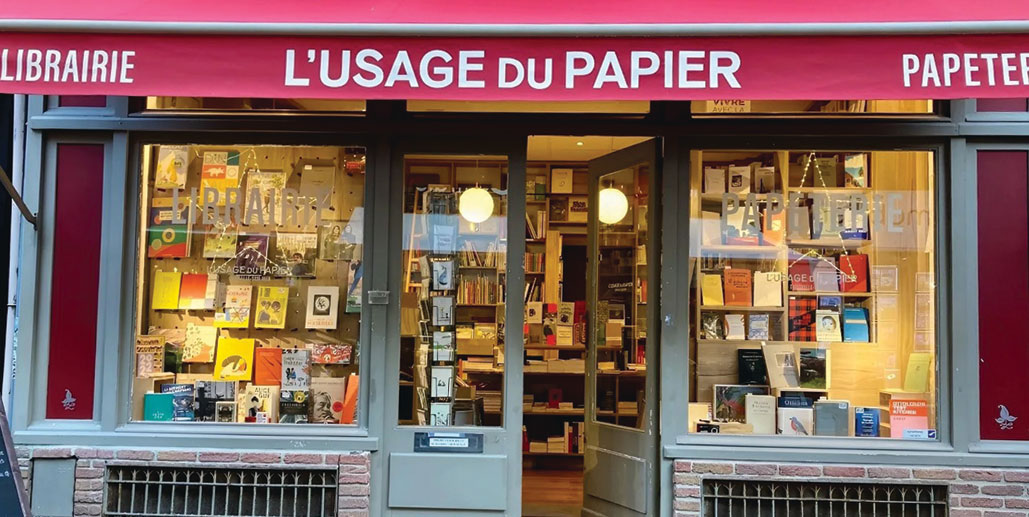
 There are 3,200 bookstores in France, including 3,000 independent stores and 200 chain stores, spread across the country. This figure has remained relatively stable since the beginning of the century. These bookstores account for 40% of total book sales, including translated literature, the humanities, poetry, theatre, art, etc.
There are two types of chain stores in France: those specializing in book sales, such as Gibert, Nosoli (Furet du Nord, Decitre) and La Procure, which are classified as bookstores, and the cultural hypermarket chains (Fnac, Cultura, Espacesculturels Leclerc), which not only sell books but also many other cultural and technical products. Cultural hypermarkets are comparable to bookstores in terms of economic importance.
How did French bookstores adapt to the COVID shutdown and how have they evolved after that?
Bookstores were forced to close during the first two lockdowns, before being recognized as “essential businesses” and allowed to remain open. The public aid they received during this period to cover their operating losses prevented them from going out of business.
The closure of bookshops was the subject of a national debate in France during the Covid epidemic. The extensive media coverage raised public awareness on the importance of independent bookstores.
There have been two developments as a result of this crisis. Firstly, it led to a sharp increase in the number of bookstores equipped with websites offering in-store pickup or home delivery of books. Secondly, it led to a boom in bookstore openings: 500 new bookstores opened in France between 2019 and 2024, with many people deciding to change professions to pursue a career in this field.
What is the share of online retail as opposed to physical retail in France?
The share of e-commerce is the only market segment that has been growing continuously for many years. Nevertheless, thanks to a wide network of retail outlets across the country, in-store sales continue to account for more than 80% of the market. And while Amazon and Fnac.com largely dominate the e-commerce segment, almost all bookstores also have their own websites for online reservations and sales, which enable them to meet their customers’ demands.
The network of bookstores in France is one of the densest. What are the government policies that made it possible and have supported this growth?
The high density of bookstores, both in Paris and across the rest of France, is facilitated by the fact that books are sold at a fixed price, which allows bookshops to avoid price competition from chains or online retailers who are able to offer significant discounts owing to their financial clout and the wide range of products they sell other than books.
Added to this is a reduced VAT rate on books (5.5%) and financial assistance in the form of interest-free loans for investments (creation, relocation, renovations, etc.) or subsidies, for example for literary events.
Has the fixed law price implemented in other countries and what are its shortfalls?
Most European countries have fixed prices for books, as do Mexico and, in Asia, Japan and South Korea. The two main hurdles faced by this legislation today are, on the one hand, competition from major online retailers and, on the other hand, the economic woes faced by bookstores, which cannot pass on the increase in their operating costs to the public through higher retail prices.
What is the main role and missions of the French Bookselling Association?
The SLF’s main mission is to represent and defend the bookselling profession. Its actions are therefore directed at national and local public authorities and other book-related professions, such as publishers, sales agents, and distributors, as well as authors and librarians, and also at the general public through campaigns promoting bookstores.
The primary objective is to preserve the legal and regulatory framework that enables bookstores to develop their business. This mainly concerns fixed book prices, VAT, public procurement rules, and payment terms. Secondly, the SLF plays an economic role by encouraging the main suppliers to bookstores, starting with the major publishing groups, to implement commercial and financial measures in favour of independent bookstores. And finally, the SLF strives to improve the productivity and qualifications of booksellers through “economic intelligence” tools that it makes available to booksellers (Bookstore Observatory) and a professional training policy.
The French Bookselling Association works with various partners. How do these collaborations work?
The SLF collaborates effectively with a large number of public and private partners. In the public sector, our main contacts are the Ministry of Culture, which oversees public policy on books, and the National Book Centre, which is its operator for support to book professionals. Currently, for example, we are working with them on defending the fixed book price and regulating delivery costs for books ordered online, on maintaining the Culture Pass, a scheme aimed at youth, as well as on European regulations (regulations on deforestation and payment terms) and adapting CNL aid to the challenges facing bookstores over the next ten years.
We also have a number of ongoing discussions with publishers, sales agents, and distributors on topics such as the application of a minimum trade discount for small bookstores, the management of book transport, price marking on books, the impact of artificial intelligence, and actions to promote greater consideration of environmental issues within our sector.
What are the biggest opportunities and challenges for independent bookstores in France today?
The major challenge is the decline in readership, not only is the number of readers gradually decreasing overall, but so too is the proportion of “avid” readers, i.e., those who read more than twenty books a year and are the primary customers of independent bookstores. In response to this trend, booksellers must continue to promote what makes them unique and attractive: the relevance of their selection, their welcoming atmosphere, the beauty of their premises, and, last but not least, their efforts to bring reading to life beyond the book itself by inviting authors to bookstores, organizing festivals and workshops with children and teenagers, and collaborating with other cultural establishments (libraries, theatres, movie theatres, universities, etc.).
How is the French bookselling ecosystem looking at sustainability?
Booksellers are sensitive to environmental issues because of the responsibility they feel towards society. Many initiatives are being taken within the profession to reduce the environmental footprint of bookstores, but also to provide the public with a relevant selection of books on this topic.
However, studies show that within the book sector, it is the upstream part of the chain, i.e., book manufacturing, that accounts for 80% of the environmental footprint, with book transportation being the second largest factor. As a result, booksellers are calling for environmental issues to be taken into account across the entire chain. They are also campaigning for a reduction in the “overproduction” of books in favour of greater attention and more time being given to each title.
What innovations do you think will define book selling in coming years?
There is no doubt that artificial intelligence will have an impact on the book industry and publishing. It will make it possible to optimize many processes in terms of logistics, distribution, and databases, and to better understand the behaviour and expectations of bookstore customers. However, when it comes to creation, these developments must be carried out in a way that is respectful of both copyright and the human dimension of producing creative works. No matter how advanced AI becomes, it will never be able to truly “create” anything, but only reproduce it in a disembodied manner.
Artificial intelligence also raises the issue of the ability to produce “books” in an almost infinite manner, with the risk that the internet giants will flood the web with an unlimited amount of content, at the risk of stifling human creativity. We can see that a player such as Amazon is already engaged in such a strategy. Faced with such a risk, booksellers will have a role to play as trusted third parties that can distinguish between books that are the result of creative work from books who are not.
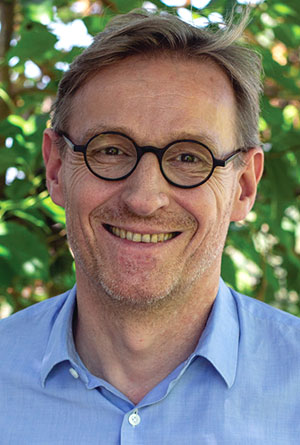
For the past fifteen years, Guillaume Husson has served as the Director of the Syndicat de la Librairie Française (SLF), the union representing France’s independent booksellers—the country’s primary network for book sales. Under his leadership, the SLF has brought together 750 members, ranging from small independent bookshops to bookstore chains, collectively accounting for over 80% of employment and turnover in the sector. He also serves as a key public voice for independent booksellers, maintaining strong relationships with stakeholders across the book ecosystem—publishers, authors, librarians, and public authorities—both in France and at the European level.
Comments are closed.