
Changing landscape of K12 publishing in India
Over the last ten years, there has been a profound transformation in India’s K12 (Kindergarten to 12th grade) educational sector, driven by changes in teaching approaches, governmental reforms, and technology improvements. Because of this, the K–12 publishing market in India is changing quickly, with publishers implementing creative approaches to satisfy the increasing needs of a modern learning environment. Chander Mani Gosain of Friends Publications (India) shares his views.
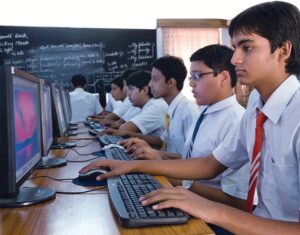
 The shift from print textbooks to digital learning resources has been the most noticeable development in K12 publishing. Due to the widespread availability of smartphones, tablets, and reasonably priced internet access, educators and learners alike have begun incorporating digital materials into their regular classroom routines. These days, more and more publishers provide multimedia-rich content, interactive e-learning environments, and digital copies of textbooks. Businesses like Byju’s and Vedantu have pushed traditional K12 publishers to adjust as they have established a standard for the growth of e-learning platforms.
The statistics…
India’s overall market share in K12 publishing is a component of the larger education sector, which has been steadily expanding in recent years. Based on approximations, the K12 education sector in India is among the biggest globally, with the publishing industry playing a pivotal role in it. According to recent estimates, the value of the K12 publishing market in India was roughly INR 75,000 crore (USD 10 billion). This sector includes both the quickly expanding digital content business and traditional print publishing. The market is anticipated to develop even further with the adoption of the National Education Policy (NEP) 2020 as demand for updated curricula and content that is in line with new educational standards rises.
K12 publications…
India’s K12 publishing business is broad, meeting the demands of educators, students, and educational institutions at all educational levels. The various categories into which K12 publications in India can be broadly divided are as follows:
1. Textbooks
- NCERT Textbooks: The Central Board of Secondary Education (CBSE) curriculum is followed in schools using them as their main textbooks. The National Council of Educational Research and Training (NCERT) publishes these, which are standardized and used by numerous Indian schools connected to the CBSE.
- State Board Textbooks: The state boards of education in each Indian state are responsible for publishing textbooks in both English and regional languages. These are in line with the curricula and syllabus set forth by the relevant state boards and is utilized at schools that are affiliated with states.
- Textbooks from Private Publishers: Both state board and CBSE textbooks are published by a number of private publishers, including Oxford University Press, Macmillan, Pearson, and S. Chand. When compared to government-published textbooks, these publications frequently offer more information and supplemental materials.
2. Handbooks of Reference
- Subject-Specific Reference Books: These aim to offer more in-depth understanding of particular fields, such as physics, math, languages, and social sciences. These books are published by publishers including MTG, Oswaal, and Disha Publications and are well-liked for extra practice and competitive test preparation.
- Advice and Solutions: These publications make it simpler for students to be ready for tests and practice issues by offering thorough answers and solutions to the exercises found in textbooks.
 3. Addendum Information
- Workbooks and practice books: Designed to supplement primary textbooks, these resources offer exercises, activities, and practice problems to improve students’ comprehension of the material.
- Activity Books: Frequently utilized in elementary and middle schools, these books promote learning through interactive exercises like crosswords, puzzles, coloring pages, and creative projects.
- Question Banks and Sample Papers: Books with a compilation of previous exam questions, sample test questions, and model answers that students can use to practice and get ready for their tests. For the board exams for Classes 10 and 12, these are very well-liked.
4. Study Guides for Competitive Exams
- Olympiad Books: They are designed for students getting ready for national and international competitive exams, as well as academic competitions such as Science Olympiad and Math Olympiad.
- Books for Entrance Exam Preparation: Books designed for JEE, NEET, CLAT, and other professional course entrance exams are commonly utilized for higher grades, particularly 11th and 12th.
- Scholarship Exams: This category includes books for competitive exams like the Kishore VaigyanikProtsahan Yojana (KVPY) and the National Talent Search Examination (NTSE).
 5. Electronic and Online Course Materials
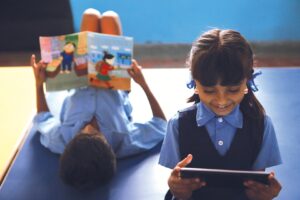
- E-Textbooks: As education becomes more and more digital, several publishers offer e-textbooks that can be accessed through applications or online platforms. These could contain educational animations, quizzes, and videos with interactive elements.
- Educational applications: Curriculum-aligned information is available in a variety of formats, including video lessons, live courses, and interactive activities, through K12 educational applications like Byju’s, Vedantu, and Toppr. Apps that give users access to their digital material are also being developed by traditional publishers.
- Digital libraries, interactive learning modules, and subject-specific practice questions: are all available to students on online practice platforms. A few of these platforms provide performance tracking and assessments in real time.
6. Resources for Teachers
- Teacher Guides: These resources give instructors lesson plans, teaching outlines, and teaching techniques to help them teach their courses more successfully. They are made to fit the required syllabus and frequently go with textbooks.
- Tools for Assessment and Evaluation: These days, teachers can measure students’ performance and progress with the use of assessment books, rubrics, and question papers.
- Professional Development Books: This expanding genre provides educators with tools to improve their methods, adopt cutting-edge approaches, and keep up of current developments in the field.
7. Literature for Children
- Storybooks: To meet the developmental requirements of kids in elementary and middle school, both fiction and non-fiction storybooks are published in regional languages and English.
- Moral and Value-Based Stories: Many Indian schools, particularly those in lower grades, include books in their curricula that teach moral teachings and values.
- Graphic Novels and Comics: The popularity of graphic novels and instructional comics, which make learning interesting and visually stimulating, is on the rise, particularly in metropolitan India.
8. Publications in Regional Languages
- The wide range of languages spoken in India guarantees a sizable market for textbooks and other resources written in local tongues. State boards and private publishers provide educational materials in languages including Bengali, Marathi, Tamil, Telugu, Hindi, and others.
9. Training in Vocational Arts and Skills
- Since vocational education and skill development are prioritized in the National Education Policy (NEP) 2020, numerous publishers have begun producing textbooks and training materials for disciplines including robotics, coding, financial literacy, entrepreneurship, and soft skills.
10. Inclusive education materials and special needs
- Braille Books and Audiobooks: Braille textbooks and audiobooks are becoming more and more important for students who are blind or visually impaired. Government initiatives and specialized publishers are striving to increase the accessibility of educational resources.
- Learning Disability-friendly products: As learning disorders become more widely recognized, publishers are making more products specifically designed for students who struggle with dyslexia, ADHD, and other learning issues.
The K12 publishing sector in India is broad and is expanding due to several factors such rising literacy rates, changes in education, and developments in technology. K12 publications in India meet a wide range of educational demands, whether it’s through traditional textbooks, digital resources, or specialized materials for skill development and special needs. This makes the business dynamic and lively. There is still a lot of room for innovation in this field as educational systems and technology continue to change.
Impact of NEP…
The K12 publishing industry in India has seen a radical transformation thanks to the National Education Policy (NEP) 2020. It promotes a move away from memorization and toward problem-solving, experience learning, and critical thinking. Publishers are now under pressure to produce more captivating, inquiry-based content that complies with the new curricular standards as a result of this shift. Furthermore, K12 publishers now have to accommodate different educational needs and regional content development due to the emphasis on multilingualism, local culture integration, and vocational education.
Impact of pandemic…
The COVID-19 pandemic hastened the introduction of hybrid learning approaches, which blend traditional classroom instruction with online learning. Because of this shift, publishers now have to reconsider how they provide their content to make sure that it works just as well in traditional classroom settings as it does in virtual ones. The need for blended learning programs, which incorporate video lectures, interactive activities, and online tests with textbooks, has increased dramatically. These days, publishers concentrate on developing adaptable learning platforms that meet the specific needs of each student, using AI-driven analytics to monitor performance and adjust content as necessary.
Need for local and customised content…
For K12 publishers, India’s immense linguistic and cultural variety has long presented a difficulty. Nonetheless, current patterns suggest that there is a rising need for localized content. Publishers are increasingly offering information that is tailored to certain regions in many languages, so students from different states and areas may access stuff that speaks to them in their own language. Content that is in line with state board curricula can also be customized, enabling publishers to satisfy the particular needs of any school board in the nation.
Making learning fun…
Gamification has been a big trend in K12 publishing as there is a greater emphasis on making learning fun. These days, publishers are producing interactive textbooks that actively involve students with integrated challenges, simulations, and quizzes. These interactive resources not only increase understanding but also sharpen memory and stimulate critical thinking. By encouraging active student participation, gamification in learning platforms deviates from the conventional passive learning paradigm.
In order to remain competitive, K12 publishers are working more and more with EdTech businesses as the boundaries between education and technology become more hazy. Through this collaboration, publishers can include cutting-edge technologies into their content, such as virtual reality, machine learning, and artificial intelligence. These kinds of partnerships support the delivery of individualized education and guarantee that students stay interested in a dynamic learning environment.
Skill-based content…
Because of the NEP’s focus on vocational education, curriculum publishers for K–12 are now including a greater amount of skill-based content. Coding, entrepreneurship, financial literacy, and practical life skills are all becoming commonplace subjects in K–12 curricula. This is a change from traditional academic courses to a more comprehensive approach that gets pupils ready for issues they will face in the real world.
Assessment solutions…
K12 publishers are providing whole assessment solutions instead of just creating content. These tests are now more data-driven, using analytics to give students individualized learning plans and real-time feedback. Adaptive exams, which modify difficulty levels according to student achievement, are increasingly being included by publishers. These assessments give educators and parents important information about a kid’s areas of strength and growth.
Towards sustainability…
K12 publishers are under growing pressure to implement sustainable methods as environmental awareness rises. As a result, there has been an increase in environmentally friendly publishing, including the printing of textbooks on recycled paper and the promotion of digital alternatives to cut down on paper usage. In addition, a lot of publishers are currently looking into ways to lower their operational carbon footprint and match their methods with more general global sustainability objectives.
In a nutshell…
India’s K–12 publishing sector is going through a rapid upheaval. A more adaptable, digital, and student-focused approach is replacing the conventional textbook-driven paradigm. K12 publishing in India is expected to become more inclusive, technology-driven, and student-centered in the future as publishers keep coming up with new ideas and responding to the shifting demands of the educational system. Accepting these changes and providing solutions that meet the changing demands of students, teachers, and the larger educational ecosystem will be essential to publishers’ success.
The K12 publishing sector in India is confronted with a distinct range of obstacles due to the swift progress of technology, evolving educational perspectives, and intensifying competition from digital enterprises. Although the shift to digital presents new potential, the process is complicated due to related expenses, infrastructure problems, and regulatory barriers. For publishers to remain competitive in this changing market, they need to be flexible, inventive, and open to working with EdTech businesses. K12 publishers in India can maintain their crucial role in influencing the direction of education by taking these issues head-on.
Comments are closed.