
A Fresh Approach to a Planet-Friendly Book World
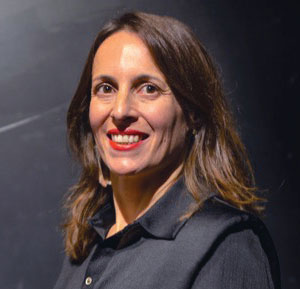
As the book industry confronts urgent ecological challenges, Gaëlle Bohé, Founder of The Book Fresk, is helping professionals rethink how books are made. In this conversation, she explains why collective action, smarter design, and system-wide change are essential for building a sustainable publishing future.
What inspired you to focus on sustainability in publishing and develop The Book Fresk as a tool for change?
Developing alternative distribution models, improving forecasting tools, reducing print runs, and strengthening collaboration between publishers, booksellers, and distributors can all help limit unnecessary production while maintaining a diverse and dynamic publishing ecosystem.
Before leading Fontaine O Livres, I worked as a journalist covering cultural, social, and environmental issues. So when, in 2022, we organized a workshop on ecological challenges in the book industry, I was struck by how unaware many professionals still were of these questions.
This encouraged me to design a training programme to help publishers integrate eco-responsibility into their practices. During this process, the consultant Charles Hedouin – himself a publisher with expertise in environmental studies – told me about the Climate Fresk and the various adaptations he had already developed. He said: “Why not create a Fresk for the book industry?” It was an excellent idea. Fontaine O Livres decided to carry the project, and Charles Hédouin engineered the tool. That’s how The Book Fresk was born.
Across sourcing, printing, distribution, and returns, which environmental issues pose the greatest challenge for today’s book industry?
The solution must be a collective one. Every person in the supply chain has a responsibility and can act at their individual level, but meaningful change will only occur when all professionals work together. Publishers and printers, for example, can jointly develop standards or environmental labels, while distributors can help reduce unsold returns and improve logistical efficiency.
The Book Fresk is not about identifying “good” or “bad” ones. Instead, it creates a space where professionals from across the industry can understand the system as a whole and work together to find solutions.
What is The Book Fresk’s mission and how does it help the industry shift to greener models?
The strongest trend in France today concerns second-hand books. In 2022, around 20% of all print books purchased were second-hand — a choice driven not only by ecological concerns, but also by financial ones.
The Book Fresk is a collaborative card-based workshop played in groups of five, guided by a facilitator. Each group begins with a set of cards representing different stages of the book value chain. Their first task is to arrange the cards in chronological order — which initially seems simple: author, publisher, printer, bookseller, and so on.
But as additional branches of cards are introduced, the system quickly becomes more complex. On the back of each card, participants discover up-to-date social and environmental data that help reveal the true impacts of each stage.
Through this process, participants gain a clearer understanding of the complexity of the industry’s ecological and social challenges. The workshop then continues with a collective exercise where participants identify concrete solutions, both individually and across the entire value chain, encouraging collaboration towards more sustainable publishing models.
What does eco-design mean for books, and which concrete choices have the strongest effect on lowering their environmental footprint?
Eco-designing a book means considering its environmental impact from the very beginning of the publishing process. This involves making responsible choices at every stage: selecting a format that avoids paper waste, choosing papers, inks, and glues with lower environmental impact, and ensuring that any labels or certifications are meaningful and transparent. It also means planning realistic print runs to limit overproduction and reduce the number of unsold books, which remain one of the major environmental issues in the sector.
What solutions can reduce overproduction and returns while keeping the publishing ecosystem diverse and thriving?
The book industry has begun its transition recently, but it is now actively addressing its own specific environmental and social challenges.
Overproduction and high return rates largely stem from the way the current distribution system is structured. Distributors are often the only professionals in the supply chain who do not bear financial risk: their business model depends on the volume of books transported, meaning they earn money whether books are sent out or returned. This partly explains why many distribution companies are owned by large publishing groups, and why the system tends to encourage overproduction.
To reduce waste, we need to rethink this system. Developing alternative distribution models, improving forecasting tools, reducing print runs, and strengthening collaboration between publishers, booksellers, and distributors can all help limit unnecessary production while maintaining a diverse and dynamic publishing ecosystem.
How do you envision each stakeholder contributing to a unified, eco-responsible book ecosystem?
Readers, public institutions, and legislation increasingly encourage the book industry to engage in ecological transition. Companies across the sector also understand that they need to act together: collaboration makes the process both more efficient and more affordable.
All these share common values — a belief in the importance of books for education, ideas, imagination, and democracy. By putting aside certain individual constraints and working collectively, they can strengthen cooperation across the entire value chain and build a more resilient and sustainable book ecosystem.
How can the book industry strengthen and standardise life-cycle assessments to guide smarter environmental decisions?
In France, the book industry is currently developing a tool that will allow publishers to calculate the real environmental impact of each book, from the origin of the wood to paper manufacturing, to printing locations, and beyond. But life-cycle assessments also need to include later stages of the value chain, such as distribution, returns, pulping, and potential reuse. Once fully implemented, this tool will help publishers compare the impact of different books and set clear sustainability objectives for future productions.
How are readers embracing greener habits, and what can the book industry do to support these choices?
Yes, we are observing several encouraging shifts. Some readers are increasingly attentive to buying locally, especially at neighbourhood bookshops, regional book fairs, or during meetings with local authors and publishers. However, the strongest trend in France today concerns second-hand books. In 2022, around 20% of all print books purchased were second-hand, a choice driven not only by ecological concerns, but also by financial ones.
Most second-hand sales, however, occur through online platforms, with books shipped individually by mail. This generates transport-related environmental impacts which partly offset the ecological benefit. Another important side effect is that authors and publishers receive no revenue from these copies, which ultimately affects the financing of literary creation. There are currently legislative proposals aimed at taxing second-hand book sales to redistribute a share of this fast-growing market to authors and publishers.
France has been encouraging ecological transition across cultural sectors. How do national policies and incentives support the goals of sustainable publishing?
France supports the ecological transition by funding part of the process, promoting dedicated programmes, and increasingly making public subsidies conditional on measurable actions. In the film and music sectors, this approach is already well-established: cinema has integrated social and environmental commitments — for instance, stronger protection for women following the #MeToo movement, the reuse of sets, and reduced crew travel. The music industry is also reorganising touring schedules to limit air travel.
The book industry has begun its transition more recently, but it is now actively addressing its own specific environmental and social challenges.
Which innovations or new practices give you the most hope for a greener book industry, and how do you imagine a genuinely sustainable publishing ecosystem over the next decade?
We don’t yet know exactly what the book supply chain will look like in the future, but I am optimistic, because I see a strong collective willingness to act. Across the sector — publishers, printers, booksellers, but also associations, unions, and the Ministry of Culture — there is real engagement and a shared desire to rethink the system. Many stakeholders have already taken part in The Book Fresk and want to go further. For example, we are currently training France Livre, which started with The Book Fresk, to design its own transition pathway. The energy and commitment are there. The transformation is underway!
Gaëlle Bohé is the Director of Fontaine O Livres, a Paris-based organisation that strengthens the publishing sector through training programmes, an incubator, and a network dedicated to independent publishers. A former journalist focused on sustainability, she has also worked as a literary programmer for the Festival du Livre de Paris and La Nuit de la Lecture. She co-created La Fresque du Livre (The Book Post) with environmental expert Charles Hédouin and founded the Prix Hors Concours, a major literary award championing independent publishing, which marked its 10th anniversary this year and recently launched an international edition.
Comments are closed.