
Webtoons: a global creative bridge between India and France
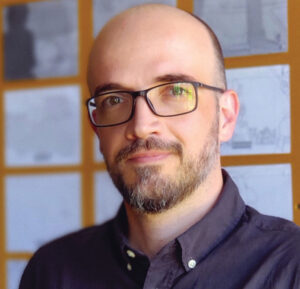
As reading habits rapidly evolve, India and France are witnessing an unprecedented interest in manga, anime and webtoons. Josselin Azorin-Lara, founder of Akogée Studio, shares that it is more than a trend: it’s a cultural shift shaped by a new generation hungry for immersive, visual-first narratives.
What is driving the current boom in webtoons in India and France?
Over the last decade, both India and France have seen an acceleration of new reading habits. In my opinion, three factors explain the boom: mobile-first consumption, globalized storytelling, and the arrival of structured creative ecosystems. In India, the rise of affordable smartphones and cheaper data plans, have profoundly changed reading behaviours, for digital content like webtoons. Digital-native readers now discover stories on their phones long before they pick up a printed book. Webtoons perfectly fit this shift: short episodes, vertical scrolling, and strong emotional hooks.
In France, the boom comes from a different origin: a strong comic-book culture and a very demanding audience. French readers are curious, open to international narratives and new formats. Korean and Japanese IPs have opened the path, and French creators are now taking the lead with ambitious original content.
Both countries are driven by the same underlying force: a new generation seeking immersive, accessible, visually powerful storytelling.
What differentiates the comic & webtoon ecosystems in India and France? How do you think the two countries can collaborate?
France has a long history of structured creative industries, even for comic books: public funding, dedicated festivals, specialized publishers, organized distribution, and an ecosystem of authors protected by strong IP frameworks. Regarding the webtoons, it is still the “Far West”, by which I mean a place with no rules. As of today, the webtoon is not recognized as a sole industry. The Centre National du Livre (French National Book Centre) tells us that “it’s not a book” and the Centre National du Cinéma (French National Cinema Centre) tells us that “it’s not an animated content”. In the meantime, the Korean, Japanese and Chinese content are becoming huge hits.
India, on the other hand, is an emerging powerhouse with extraordinary talent, high-speed digital adoption, and a massive youth population entering creative fields. Somehow, we may face the same challenges regarding the webtoons. I remember my friends and colleagues in India who were dreaming of making a career in the comic book industry, telling me that it was quite a struggle to even get paid for their work. There is still much to do on both sides, and we can certainly collaborate in many ways. I loved working with Indian artists, as we could work as teams which is not that common in France. The boom of webtoon could be a wonderful opportunity for creative and industrial cooperation.
How do new readers get attracted to this genre and what is their preference?
Today’s readers discover stories through algorithms, not bookstores. Social platforms—Instagram, YouTube Shorts, Webtoon, Wattpad—have become the entry points. France and India seem to share the same challenge: audiences are not ready to pay for digital content. They prefer subscriptions.
For Indian and French markets, I believe that the webtoon economy should be considered as a social network economy, just like YouTube, TikTok or Instagram, which can be interesting for advertisers.
What are the challenges the industry faces and what is the future growth potential?
The challenges are real and global:
- Author remuneration: Many creators struggle financially, despite huge audience numbers. Sustainable models must be invented.
- Discoverability: With thousands of series released every year, standing out is increasingly difficult.
- Piracy: especially in Asia, piracy drains revenue from both creators and publishers.
- Industrial scaling: Producing a weekly digital comic requires a structured pipeline, trained artists, and predictable funding.
- Cross-cultural adaptation: Stories must now travel, but not everything translates easily. And some content can be considered as offensive, from one culture to another.
Despite this, the growth potential is exceptional. Digital comics are still at the beginning of their expansion. Markets like India, Indonesia, and Brazil may surpass Western audiences in the next 5–10 years. IP-based ecosystems—print, animation, licensing, mobile games—represent enormous opportunities for both countries.
What are the current intellectual property frameworks for the industry?
In France, creators benefit from one of the strongest IP frameworks in the world: moral rights, collective rights, clear author–publisher contracts and growing recognition of digital formats.
India is strengthening its own copyright laws, but enforcement seems to remain inconsistent, from one state to another. I understand the struggle, because the Indian market is so big that it’s challenging to apply the same regulation everywhere.
The major challenge for both countries is new formats:
- Webtoon rights differ from print rights.
- AI-assisted creation complicates authorship and originality.
- Streaming platforms negotiate global licenses that sometimes bypass traditional author protections.
We need modernized legal frameworks that protect creators and ensure long-term revenue sharing. Comics and webtoons are cultural content, therefore it’s vital to secure the creators and authors. Certain people believe that we don’t need artists anymore to produce content like comics, since AI can replace them easily. But fans will lose interest in content that is not created through emotion and shared experiences. Business schools should teach our future leaders the rise and fall of entertainment industries, so they can understand why our creator needs to always be at the center of our strategies, especially in an era where the fans can connect directly and relate to their favorite creators.
How can publishers protect their IPs as new formats are adapted?
Protection must be proactive, not reactive. Today IP is not just a legal matter, it is an asset strategy:
- Integrated contracts: covering print, digital, webtoon, motion comic, animation, videogame, licensing, and emerging formats.
- Clear chain of title: ensuring every contributor signs a proper rights’ transfer agreement.
- Digital fingerprinting and watermarking to fight piracy on mobile platforms. A European company called LICCIUM has been working on this topic for many years, and is looking for partners to develop solutions. Such potential partners will be very important in the future.
- International licensing strategies—working with trusted partners, not selling global rights all at once.
- Community engagement: we are in the social network era, where communities and fandoms have the power of life and death over content creators, publishers and producers.
What drives you about the evolving ecosystem of comics, graphic novels & webtoons?
What excites me most is the shift from publishing to world-building. Stories are no longer limited to a single medium. A universe can begin as a webtoon, expand into a novel, transform into an animated series, inspire a video game, and live through its community. This transmedia approach—something I work on with Akogée Studio—is a renaissance for creators.
We are entering a new era where: readers become participants, stories live across formats, and international collaborations create new narrative voices.
France and India share something precious: a profound love for stories. If we manage to build bridges between our creators, publishers, funding bodies and industries, we can create IPs that travel the world.
Author, screenwriter and webtoon producer, Josselin began in 1996 in the comic fanzine scene as co-founder of Nekomix, then moved into entrepreneurship with the Neko Wearbrand (Naruto, Nana, GTO). From 2013 to 2020, he lived in India, where he co-founded MINTE, a comic studio employing local artists and producing successes such as the Frigiel series. In 2020, he became one of the first French webtoon authors on Naver France with Samourawaii. After joining the ADAGP comic book commission, and Ankama Editions to develop webtoon production, he founded Akogée Studio in 2025.
Comments are closed.