
A Bright Horizon for India’s Bookshops
Leonard Fernandes shares that by shifting the attitude from competition to collaboration, the publishing industry can further enhance the position of the physical bookstore as the ultimate engine for book discovery, especially for the diverse, multi-lingual voices that define modern India.
 The rise of e-commerce giants in India, especially Amazon with its large discounts and almost immediate delivery, and the digital pivot that accelerated prior to the pandemic led many to predict the end of the shelf. However, as we move towards 2026, a different story is emerging. It is one of profound resilience, a rediscovered joy of the analogue, and a reimagined third space. Today, one can comfortably say that India’s bookshops are not just surviving – they are evolving into the most vital nodes of our cultural ecosystem.
The Post-Pandemic Physical Renaissance
The pandemic was an unexpected catalyst for a print revival. After years of digital saturation, Indian readers experienced a profound return to the physical book as people thought their physical isolation could be ameliorated with a book in hand. In September 2022, after the worst of the pandemic had passed, the India Book Market Report 2022 released jointly by Nielsen BookData and The Federation of Indian Publishers (FIP) had predicted that “the Indian print book market [would] reach just shy of INR 1 lakh crore ($11.6 billion) by the end of 2024 ”.
Globally, hard-copy books held a dominant 78.19% revenue share in the global books industry in 2024, as they offered readers an opportunity to disconnect from screens and escape the constant interruptions of texts, emails, and notifications. Print books dominate India’s publishing market, with the market indeed having reached earlier projections of sales worth ?1 lakh crore (over $11.6 billion USD) in 2024-2025. These sales were driven by high literacy, educational demand, and strong regional language consumption, despite digital growth, making India a major global book market.
We have entered an era where the bookshop is viewed as more than just a place where books are sold. They have transitioned from retail points to community hubs. While researching for this article, I came across a statistic that surprised me which stated that as of late 2025, there are over 50,225 bookstores in India (a figure includes every textbook depot and stationery shop in the country), a 3.74% increase from 2023, with single-owner operations making up over 98% of this landscape. A list that Peter Griffin compiled during the pandemic, and one which admittedly needs to be revised, focused on literary bookshops alone i.e., those that did not primarily sell stationery or textbooks, nor were they publisher-owned outlets selling only their own titles. This list of real bookshops, the kind this article focuses on, has a much smaller count.
During the lockdown, independent stores stepped up to ensure that customers were not left without the books they wanted and came up with novel ways to do so:
The Bookshop (Delhi): During the lockdowns, this store (which has since moved locations and is now called The Bookshop Inc.) pivoted to personal curation via Instagram and handwritten notes, proving that intimacy scales better than code-driven recommendations.
voucher campaigns and fostering an emotional bond with patrons, they demonstrated that community loyalty can withstand even the steepest economic downturns.
During this time, online portals were subjected to heavy strain, providing an opportunity for bookshops to fill the gaps and address the needs of their communities. This paved the way for a sustained period of growth during which the role of the bookshop as a reliable source of well curated books was recognised – a recognition that has since endured.
In an infinite digital scroll, the reader is often paralyzed by choice. This is where the bookseller plays a vital role. The curation economy is the bookstore’s greatest competitive advantage. While e-commerce platforms prioritize paid placements and recent trends, a passionate bookseller prioritizes the right fit.
Online shopping is fundamentally search-based (you buy what you already know), whereas physical bookshops are discovery-based (you find what you didn’t know you needed). This distinction is a lifeline for backlist and mid-list titles, as well as debut authors who lack the massive marketing budgets required to trend on digital algorithms.
A Launchpad for Indian Languages
Perhaps the most optimistic trend in Indian bookselling is the democratization of the shelf. India’s linguistic diversity is its greatest strength, and physical bookstores are best suited to promote this bibliodiversity.
Recent industry findings show that Indian language publishing is experiencing a massive revival. While Hindi and English dominate, languages like Gujarati, Punjabi, Malayalam, and Telugu also have large readerships. According to a report by CAPEXIL, 45% of trade books sold are in regional languages, highlighting the breadth of the market beyond English.
The Translation Bridge: The global success of Indian translations has created a hunger for more. Physical bookstores are uniquely positioned to place the original language version alongside its English translation, fostering a bilingual reading culture.
Localized Discoverability: While online algorithms often bury vernacular titles under global bestsellers, stores like Atta Galatta (Bengaluru) specifically house Indian writing and regional-language books, creating a symbiotic relationship with their readers.
The Cooperative Ecosystem: A New Blueprint
I believe that the future of bookselling lies in a Cooperative Ecosystem – a synergy between publishers, distributors, and retailers.
The Omnichannel Strategy
The most successful Indian bookstores today are Phygital. They use WhatsApp and Instagram to build communities, but the final fulfillment usually happens in-store. Many Indian bookstores now maintain active Facebook and Instagram profiles, using these tools to communicate directly with book buyers and in turn drive physical footfall. Here too, there is an opportunity for publishers and booksellers to work together so that books can be brought to the reader’s attention early and often.
This digital layer offers a massive, untapped opportunity for publisher-retailer synergy. Rather than acting as separate entities, publishers can empower booksellers by providing, for instance:
Early-Access Digital Kits: Including high-quality social media assets like book trailers, author soundbites, and behind-the-scenes snippets, weeks before a launch.
Direct-to-Bookseller Newsletters: Ensuring that local stores are the first to know about upcoming releases, allowing them to build pre-order buzz within their local WhatsApp groups.
Collaborative Virality: When a publisher and an independent store co-host an Instagram Live or a signed-copy reveal, such as during the high-octane September 2025 launch of Arundhati Roy’s memoir, Mother Mary Comes to Me, they bypass the impersonal search algorithm and speak directly to a curated, high-intent audience.
By treating the local bookstore as a primary marketing partner rather than just a distribution point, publishers can ensure that new books are brought to the notice of readers early, often, and with the human seal of approval that only a trusted bookseller can provide.
In return, the bookstore provides a high-conversion touch and feel experience and essentially doubles as a showroom for the publisher’s titles. This is especially vital for India’s children’s book industry, which possesses immense untapped potential and is poised to maintain double-digit growth over the next decade as parents seek physical alternatives to screen time.
Shared Innovation
The FICCI PubliCon 2025 conference, held on August 5, 2025, marked a significant shift in how the Indian publishing industry views its role in the nation’s socio-economic landscape. By positioning publishers as equal stakeholders rather than just content suppliers, the industry is committing to a model where books serve as primary drivers of the knowledge economy. By cooperating with local bookshops on shared logistics and national Shop Local campaigns, the industry can reach deeper into Tier-2 and Tier-3 cities, thereby expanding the readership for its books. Such initiatives help bring Indian language books into regions with previously limited access. While digital catalogues provide visibility, it is the shared logistics of this cooperative ecosystem that finally provides actual accessibility.
Focusing on the Backlist
Publishers derive the vast majority of their profit from their backlist – books published more than six months ago that continue to sell. These titles often serve as the economic engine that sustains new, more speculative publishing projects. By partnering with booksellers to ensure these core titles remain physically visible, publishers can keep their most reliable assets in front of the reader at all times, turning the bookshelf into a perpetual discovery machine. When publishers and booksellers collaborate on Backlist Spotlights (like a Modern Classics table, for example), there is an opportunity to help the author build a brand rather than just sell a single product.
The Economic and Social Dividend
The Indian publishing industry is not just a cultural asset, it is a powerhouse for employment and industry. It supports over a million jobs and plays a pivotal role in disseminating knowledge. A vibrant bookselling infrastructure like that which bookshops can provide is essential to making sure that books reach their intended readership and provide and sustain a cultural soft power.
Beyond economics, bookshops are where ideas are debated and where a child’s imagination can be first ignited. Further, as mentioned earlier, bookshops are being reimagined not as retail outlets, but as third spaces – neutral ground between home and work. Research shows consumers find bookshops inspiring and soothing, comparable to a walk in nature.
The Horizon is Bright
The Death of the Book was indeed a premature diagnosis. Instead, what we are witnessing is a Rebirth of the Bookshop. By focusing on the unique strengths of the physical space – curation, community, and the celebration of Indian languages – the ecosystem is building a sustainable future.
When a publisher, a bookseller, and a reader cooperate, they do more than just complete a transaction; they sustain a civilization. The Indian bookshop is no longer just a place to buy a product; it is where the soul of the nation finds its voice, one shelf at a time.
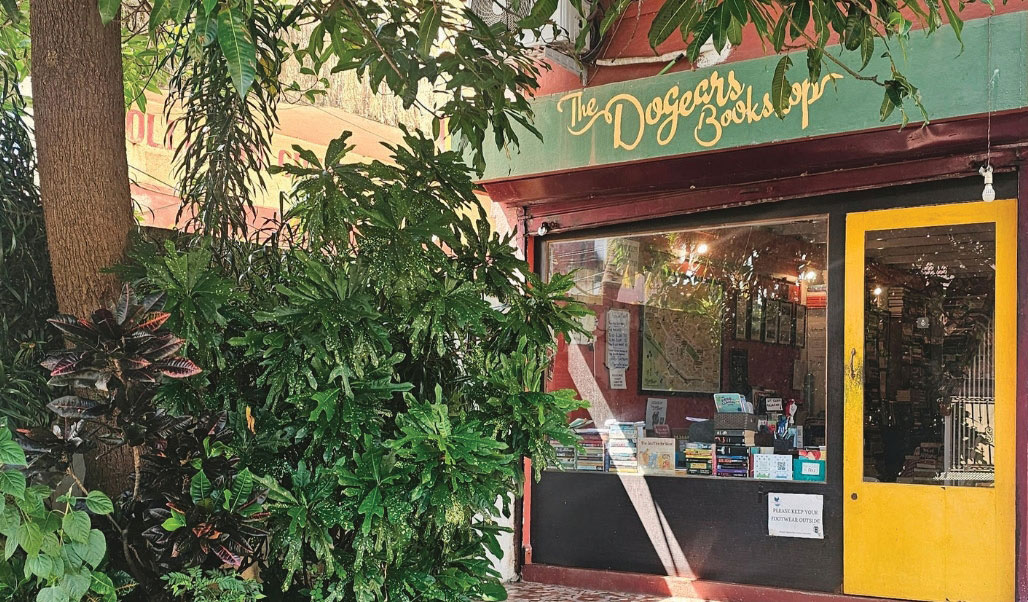
Leonard Fernandes moved from enterprise software into the world of books in 2006, beginning with DogearsEtc, an early peer-to-peer bookselling platform. He soon co-founded CinnamonTeal Publishing, bringing retail self-publishing to India and earning the British Council Creative Entrepreneur of the Year Award in 2010. He later co-created Publishing Next and its Industry Awards, now key fixtures in India’s publishing landscape. His passion for bookselling led to The Dogears Bookshop (2016) in Goa and, more recently, the Goa Book Fair (2023). A founding member of the Independent Bookshops Association of India, he also mentors new publishing professionals through various teaching roles.
Comments are closed.