
Reception of foreign literature in India
On Indian Readers Embracing Global Stories
Foreign literature has always found a foothold in India, but its resonance today is deeper and more diverse than ever before. Arpita Das, Founder–Publisher of Yoda Press, reflects on why genre fiction, narrative non-fiction and graphic books are gaining ground, how translations are striking a powerful chord with young Indian readers, and what publishers must do to ensure that emerging international voices find a meaningful place in India’s reading landscape.
Is there demand for foreign literature in India today and which genres work and why?
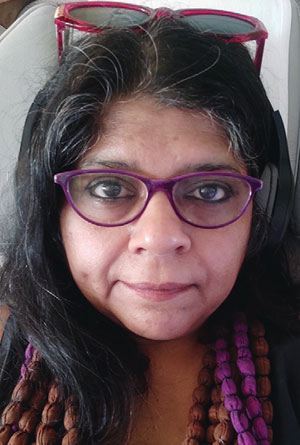 There has always been a space for foreign literature as we always had avid, discerning readers. But now even more so because our younger readers, millennials and Gen Z readers are more eclectic, nationality-agnostic readers. They are very aware of the English-hegemony in foreign literature that we, Gen X readers, grew up with. Popular Culture has moved in other directions in recent times. The immense interest in K-Drama, Manga and Anime are evidence of this. And this also reflects the younger generation’s interest in accessing foreign literature. The fact that translations are currently booming as a sector is also evidence of this same fact.
The interest currently is more in genre fiction. But for me, what is really exciting is the interest in these confounding times in narrative non-fiction across the board. The other genre I would mention is comics and graphic books.
How receptive are Indian readers to translations?
Translations are winning international awards and being recognised like never before. Recently, at Yoda Press’s annual winter book sale, we found the title that evinced tremendous interest among our readers, was a translation of French-Iranian author Chowra Makaremi, Woman Life Freedom: Echoes of a Revolutionary Uprising in Iran. These were mostly young readers and they all resonated with the women’s movement in Iran. For the first time, I feel people are beginning to become interested in translated non-fiction as well.
What are the challenges that foreign literature faces in India and how can they be overcome?
Indian editions need to be promoted more aggressively and for this, we need support to bring the authors to India. We have to locate these books more robustly among our own lists, so that the rationale is clearer to readers as to why they have been published in India. Now this is never a problem with the A-list Booker and Pulitzer winning authors whose works are translated and made available in India. But, I am more interested in mid-list authors, younger voices, those who are still emerging and experimenting with cutting-edge work. And for this, we as publishers must be more discerning about which titles we are bringing to our lists. We cannot opt for it just because there is a generous translation grant available alongside.
What is the future of foreign literature in India?
Younger readers are adept at accessing the material online and even use an AI software to have it translated, if it is in a foreign language. What can we do to curate and present this material as book-length works with care and distinction? If we can honestly answer this question, the future is bright for foreign translations in India,” concludes Arpita.
Arpita Das is Founder-Publisher of the independent publishing house Yoda Press and Editor of the South Asia list at Melbourne University Publishing. She is also Associate Professor of Writing at Ashoka University. Das writes a regular column on Indian publishing for the New York-based Publishing Perspectives.
Comments are closed.