
Championing Global Voices at Éditions Zulma
Since its inception, Éditions Zulma has earned a remarkable place in world literature by bringing bold, original voices from diverse cultures to French readers. In this conversation, Laure Leroy, Publisher and Co-Founder of Éditions Zulma, reflects on her editorial vision, the challenges of promoting translated fiction, and the role independent publishers play in reshaping the global literary backdrop.
What shaped your vision when building a catalogue focused on international literature?
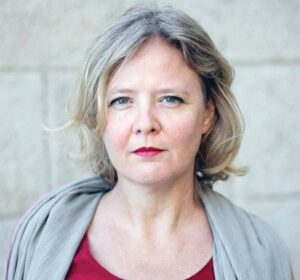
In France, as in most parts of the world, literature publishing is largely dominated on one hand by national authors, and on the other by Anglo-American writers. In this context, it seemed essential to me to highlight the world’s diversity. Our societies are inward-looking, increasingly closed off from others. Our need for otherness is all the more vital.
How do you decide which international voices to champion? What makes a manuscript or author stand out to you?
We publish only twelve new literary titles per year. Once we take into account our existing authors, there is fairly little room left for new ones. We are therefore extremely selective. The criteria would be the following:
- A good story rooted in a context and a culture, yet at the same time universal;
- Poetry, metaphors, and an original narrative voice that steps away from the highly standardized paths of Anglo-Saxon storytelling shaped by creative writing programs;
- A sense of humanity and sensitivity;
- A commitment to the world.
Ultimately, it’s a very personal choice: a work that moves me, enchants me, makes me laugh and think, one that I feel enriches and expands my world and my imaginative space; a voice so original that, once discovered, I can no longer imagine it not existing.
Our societies are inward-looking, increasingly closed off from others. Our need for otherness is all the more vital.
Marketing translated fiction is tough in a native-language dominated market. How do you position international authors for French readers?
We translate exclusively from the original language, without relying on indirect translations, except on very rare occasions. Our relationship with translators is therefore essential. And they are great ambassadors!
Over time, readers have come to understand that they will find at Zulma original voices that unsettle them a little and carry them into other worlds.
The originality of our editorial approach is clearly expressed through the originality of our covers. In a way, our cover design emphasizes the brand more than the author. The message could be this: you’ve never heard of this author, but they’re published by Zulma, you can trust us, go for it!
How do literary prizes, media, and word-of-mouth boost visibility for translated books, and how do digital platforms, book clubs and literary festivals help you reach younger readers?
In France, major literary prizes have a colossal impact on sales. But it is very rare to receive one, even more so for foreign literatures from minority languages or cultures. Another difficulty we face is very concrete: the authors live hundreds or thousands of kilometres away, and while they can spend a few days meeting with the media, they are not available for bookstore events throughout the year. Their appearances in the media are also limited by the cost of interpretation and by the media’s reluctance to broadcast languages other than French or English. In the end it is the booksellers who carry our books and recommend them, sustaining word-of-mouth that becomes our strongest driver of influence and success.
Can you share a foreign author or title that exceeded expectations in France and how independent publishers like Zulma are reshaping the global literary map?
Our greatest success in foreign literature is an Icelandic author, Auður Ava Ólafsdóttir. Her first book translated into French, Rosa candida, has sold more than 400,000 copies across all editions. But this is the exception, whose formula borders on the miraculous. Typically, a foreign literature title at Zulma sells between 8,000 and 12,000 copies for its initial standard edition.
We have also had very lovely successes with authors from Malaysia, Indonesia, or Iran. As for India, we have mostly published 20th-century classics, such as Tagore, Basheer or Bhibhuti Bhushan Banerji. Grandfather Had an Elephant by Vaikom Muhammad Basheer reached a little over 12,000 copies, mostly sold in paperback, probably thanks to the lovely title! We have also published Indian authors translated from Bengali, Malayalam and Tamil, including Sri Lankan author Antonythasan Jesuthasan (aka Shobaskhti). We have also published two essays by Pankaj Mishra, translated from English.
We choose to take risks, more so than larger publishing houses. Sometimes, success follows. When we published Auður Ava Ólafsdóttir, Icelandic literature was virtually unknown in France, apart from crime novels. Fifteen years later, after her phenomenal success, there are now dozens of literary publishers with at least one Icelandic author in their list. Since we published the Sudanese author Abdelaziz Baraka Sakin, who drew a great deal of attention, two or three other Sudanese authors have appeared on the French market. We show that…it’s possible!
In foreign literature, readers crave discovery – a fresh narrative style and characters, who may seem distant at first but gradually feel intimately relatable.
What advice would you give to publishers and editors, especially in markets like India, who are working to build and market catalogues of world literature?
Perhaps a bit naively, it seems to me that one of the keys to success is to ask ourselves very sincerely what a book can offer our readers. Publishers too often rely on the success a book has had in its own country, and that is rarely a good indicator. Readers look for authentic reading experiences and compelling stories. In foreign literature, readers crave discovery – a fresh narrative style and characters, who may seem distant at first but gradually feel intimately relatable. It seems to me that readers’ curiosity for foreign literature is part of their search for an engagement with the world, for shared human values.
Laure Leroy co-founded Zulma in 1991 at just 23, after studying English linguistics. In 2006, she decided to completely rethink its catalogue, publishing only twelve new titles a year and placing foreign literature at the heart of its list. She also introduced Zulma’s iconic unified cover style, designed by British graphic artist David Pearson. In 2019, Zulma added essays to its renowned fiction catalogue, continuing its commitment to global voices and ideas.
Comments are closed.