
Building Stronger Indo-French Publishing Bridges
Ramesh K. Mittal, President of Federation of Indian Publishers (FIP) & then Chairperson, CAPEXIL offers a comprehensive view of the Indian publishing ecosystem at a moment of rapid transformation. He also outlines how policy, technology and international collaboration, particularly Indo-French partnerships, can shape a resilient, globally relevant future for books from India.
What are the size and characteristics of the Indian publishing ecosystem ?

According to the India Book Market Report (IBMR) 2022, powered by Nielsen BookData in association with the Federation of Indian Publishers, the Indian print book publishing market was valued at approximately ?69,640 crore in FY 2021–22, with estimates placing it at around ?1,00,000 crore in FY 2024–25. The report projects a strong growth trajectory, with the market expected to grow at a compound annual growth rate of nearly 19% over the medium term, driven largely by school education, higher education, and professional publishing.
What do you see as the key growth areas for the Indian publishing ecosystem in the next five years?
Over the next five years, Indian publishing growth will be driven by five key factors:
- Regional & Indian-language publishing: supported by NEP 2020 (New Educational Policy) and multilingual education.
- Children’s and young adult publishing: aligned with experiential learning and early literacy.
- Digital, audio, and accessible formats: including audiobooks and inclusive publishing.
- Academic, professional, and STM content: particularly in emerging areas like AI, data science, climate studies, and public policy.
- Exports and rights-based publishing: where India is increasingly becoming both a content creator and rights seller, not merely a low-cost producer.
Though smaller in size, trade publishing plays a critical cultural and soft-power role (…) it is poised for steady growth, particularly in Indian languages, children’s publishing, and rights-led international collaborations.
- Piracy and unauthorised copying, especially photocopying and digital infringement.
- Taxation and cost pressures, including GST on inputs such as paper, royalty, and printing services.
- Fragmented retail and distribution, particularly beyond metropolitan cities.
- Low per-capita reading expenditure, despite a large literate population.
- Rapid technological shifts, including AI and text-and-data mining, requiring balanced copyright frameworks.
What would you say are common challenges faced by India and France in the publishing arena?
India and France—despite differing market maturity—share important common challenges:
- Balancing cultural diversity with commercial sustainability
- Protecting authors’ and publishers’ rights in the digital and AI era
- Ensuring discoverability of quality content amidst platform dominance
- Supporting independent publishers and bookstores
- Adapting to changing reading habits, especially among younger audiences
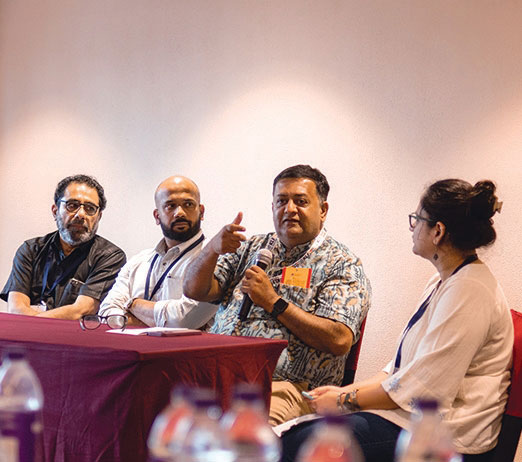
India can draw valuable lessons from France’s cultural policy framework, particularly:
- Fixed book price regimes that protect bookstores
- Strong public support for translations and literary exports
- Robust copyright enforcement mechanisms
- Institutional support for authors and independent publishers
Conversely, France can benefit from India’s strengths in: - Scalable educational publishing
- Multilingual content production
- Cost-efficient printing and manufacturing
- Large-scale readership outreach and market diversity
Both India and France recognise publishing not merely as an industry, but as a cultural and strategic knowledge sector.
- Bilateral translation grants and co-publishing funds
- Rights exchange platforms and publisher fellowships
- Joint participation in book fairs and literary festivals
- Knowledge-sharing on AI, metadata, and discoverability
- Publisher exchange and residency programmes
- Translation and rights-promotion support
- Capacity-building initiatives for young publishers
- Policy advocacy aligned with global copyright frameworks
Ramesh K. Mittal runs his nearly 6 decades old family business of export of books namely, D.K. Agencies. In 2012 he started LiFi Publications to publish literature/fiction books. He has been Chairman, Books, Publications & Printing Panel of CAPEXIL since Oct. 2011 and Chairperson for the second term till December 2025. As President of Federation of Indian Publishers, again for the second term, he has taken up a lot of new initiatives. He is also the Member of Membership Committee of International Publishers’ Association, Geneva, Executive Committee Member of the Indian Reprographic Rights Organisation and Secretary General of Afro-Asian Book Council.
Comments are closed.