
From Granthas to Global Bookshelves
- How India’s ancient storytelling shapes modern mind
Modern Indian authors, while experimenting with form and thought, continue to draw consciously and often subconsciously from these classical granthas and oral traditions. To explore this remarkable continuity, Smita Dwivedi spoke to five distinguished people from different walks of life. Excerpts.
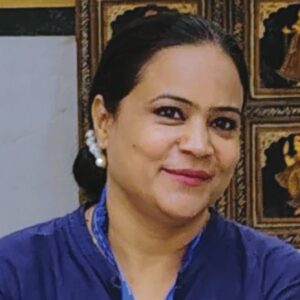
India’s literary tradition is not merely a record of words; it is a living pulse. From the cosmic hymns of the Vedas to the human sagas of the Ramayana and Mahabharata, the subcontinent has long believed that storytelling is not entertainment but enlightenment, a means to preserve dharma, ethics, and collective memory.Today, these ancient roots continue to nourish new creations. Modern Indian authors, while experimenting with form and thought, continue to draw consciously and often subconsciously from these classical granthas and oral traditions.
To explore this remarkable continuity, Smita Dwivedi engaged with five distinguished voices, which include Puspesh Pant, cultural commentator, who reflects on evolving literary tastes; Dr Sonal Mansingh, legendary dancer, who illuminates storytelling through performance; Dr Vinod Kumar Tiwari, scholar of Oriental Studies, who brings profound insights into India’s intellectual heritage; Rajesh Talwar, an award-winning author, who blends global perspectives with Indian storytelling; and Priya Arora, Vedanta scholar and writer, who reinterprets ancient wisdom for contemporary life.
Literature must retain that inclusivity: Pushpesh Pant
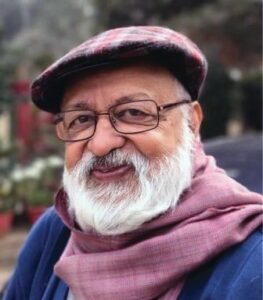
Culinary historian, writer, and Padma Shri awardee Pushpesh Pant has long been fascinated by how food, culture, and stories shape civilizations. For him, recipes and rituals are also storytelling: “Each dish, like each myth, carries the fragrance of memory.”
Reflecting on India’s narrative legacy, Pant said, “The Puranas and epics were not just literature; they were oral encyclopedias, preserving history, geography, ethics, and even culinary traditions. When we read about the Mahabharata’s royal feasts or Rama’s forest exile, we glimpse how food became an expression of emotion and identity.”
He believes that the rhythm of Indian storytelling is cyclic, sensory, and layered, which continues to influence our literature today. “We live in times when even traditional prashads have GI tags, yet the myths and stories behind them often seem forgotten or disregarded. It makes me wonder: are these ancient tales still relevant for those under 25, or have they become just a fashionable trend? Personally, I find these stories compelling when told with depth and imagination.
 Authors such as Ashwin Sanghi, Raja Ram, Anand Neelakantan, and Devdutt Pattanaik bring mythology to life for modern readers. Satyarth Nayak’s ‘Mahagatha: 100 Tales from the Puranas’ goes beyond mere retelling—it masterfully weaves interconnected stories, revealing the profound meanings hidden within these ancient myths, making them resonate even today,” he added.
For Pant, balance means celebrating diversity: “Our stories have always embraced multiplicity. There is no single Indian taste or truth; like our cuisine, it’s a symphony of flavours. Literature must retain that inclusivity, blending the ancient with the experimental.” He ended with a thought that beautifully sums up his philosophy: “Stories are like recipes — you inherit them, you adapt them, but you never forget their origin.”
Our stories move, breathe, and dance across generations: Dr. Sonal Mansingh

Padma Vibhushan Dr. Sonal Mansingh, one of India’s most iconic classical dancers, has redefined Bharatanatyam and Odissi as living narratives of culture and conscience. Her performances breathe new life into ancient mythologies, blending art with social and ecological awareness.
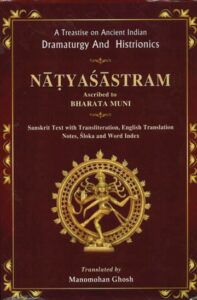
Speaking about India’s storytelling legacy, she said, “The ‘Natya Shastra’ itself is our earliest treatise on performance, literature, and psychology. It integrates sound, movement, and emotion to tell stories of human struggle and transcendence. Every performance is a retelling of ancient truths, reinterpreted for the age we live in.”
 She emphasized that Indian storytelling was never static, “Our epics are not frozen texts. They are living organisms that absorb the spirit of each generation. When I dance ‘Draupadi’ or ‘Ahalya’, I am not repeating a story; I am reliving it, interpreting it through my times.”
On balancing tradition with bold themes, she affirmed that true art “is fearless yet rooted. A tree grows tall only because its roots go deep. Our culture teaches us to innovate within dharma, which is India’s uniqueness. India’s storytelling heritage does not survive merely in books — it moves, breathes, and dances across generations.”
Weaving the past into the present: Rajesh Talwar
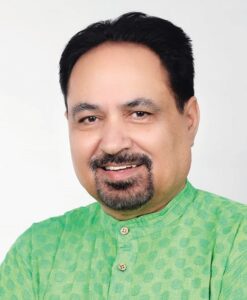
Award-winning author Rajesh Talwar, whose 43 books span novels, plays, children’s literature, self-help, and non-fiction, highlighted that the influence of India’s storytelling heritage is evident in the books being published today and in the growing demand for works connected to the country’s rich cultural past. He further added, “In my view, if we have to describe the most important phenomenon taking place in Indian literature today, it is that of ‘Reclamation.’ Yet we need not only to look into our past, however great it may have been, but also look to the future, for we have new challenges that India needs to confront. Our literature needs to draw upon the ancient where appropriate and be contemporary at the same time.”
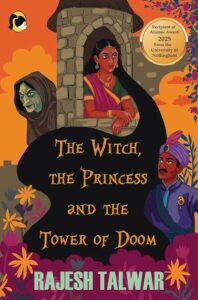 When asked whether modern Indian authors draw consciously or subconsciously from classical stories, Talwar affirmed this strongly and added, “My most recent book, ‘The Witch, the Princess and the Tower of Doom,’ has both ancient and modern elements. More than one reviewer spoke of how it has the aspect of a fairy tale and fable combined. In fact, as you may know, India was the storyteller to the world. The Western world adapted those stories to its context because we were the more prosperous, more culturally advanced society at the time the stories were written. Something like a reversal is now taking place. After many centuries, India is regaining its confidence, and storytelling prowess is a part of that confidence.”
On balancing tradition with innovation, Talwar believes there is no contradiction. Indian literature has always embraced bold philosophical themes, from morality to complex human dilemmas. He points to the Mahabharata as an example of storytelling that defies predictability, with characters and plots that explored ideas far ahead of their time. According to him, contemporary literature can honour this tradition while continuing to explore daring, relevant themes, maintaining a dialogue between the ancient and the modern.
The Ramayana as India’s cultural passport: Dr. Vinod Kumar Tiwari
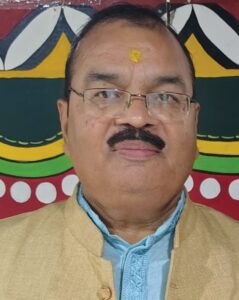
A scholar of Oriental Studies, award-winning educationist, and noted author, Dr. Vinod Kumar Tiwari has dedicated his life to exploring India’s intellectual heritage. His recent trilogy ‘Ramayana Katha ki Vishva-Yatra’, ‘Hamari Sanskritik Rashtriyata’, and ‘Purvajon ki Punya-Bhoomi’ captures the essence of cultural nationalism and the timeless journey of Indian thought.
Dr. Tiwari believes India’s storytelling traditions are more than mythological memories; they are records of civilisation. The Ramayana and Mahabharata are not legends but histories. They embody Indian culture in its most elevated form. The Ramayana is, in fact, the passport of Indian culture , a text that travelled far beyond our borders.
 While explaining further, he added, “The epic reached Southeast Asia, influencing art, governance, and language. The very name ‘Jakarta’ originates from ‘Ayodhyakarta’. Across centuries, the Ramayana became not only a narrative but a civilisational bridge.”
He sees today’s literary revival as a cultural renaissance. “Indian writers are reconnecting with Sanskrit texts, and readers are embracing them again. These works carry an inner light one that blends spiritual consciousness with intellectual depth. Modern literature must respect the continuity of tradition even as it experiments with new expressions. Our ancient stories are not restrictive; they are liberating offering endless inspiration for contemporary reflection,” he shared.For him, literature is not merely creation but a continuation of a sacred dialogue between time and timelessness.
Bridging wisdom and modern life: Priya Arora
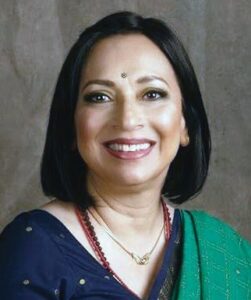
Priya Arora, author and spiritual seeker, draws on decades of study in Vedanta and Sanskrit to reinterpret ancient wisdom for modern readers. She believes the stories from epics and the Bhagavad Gita are not only historical or spiritual texts, they are guides for living. Her books, including ‘Rama: A Man of Dharma’ and ‘Life Is a Battlefield’, make these teachings practical, relevant, and accessible.
She reflected on India’s rich literary heritage, noting that texts like Valmiki’s Ramayana, known as the adikavya, and the works of Kalidasa, Bhasa, Sudraka, Bhavabhuti, Magha, Vyasa, and Vishnu Sharma form the foundation of the country’s storytelling tradition. While explaining her views, she said, “Many classical works were neglected during colonial rule, but now a renewed interest in epics and classical granthas is energising contemporary literature. My personal experiences have deepened my understanding of these texts. Life teaches you the lessons the scriptures speak of. I try to connect the timeless wisdom of Vedanta with the daily realities people face today.”
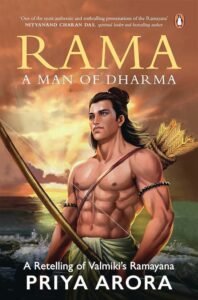 She further added, “Epics are making a strong comeback. Authors are not only retelling them for today’s readers but also using them as inspiration for new narratives. Even my books reinterpret the Ramayana and the Bhagavad Gita, demonstrating how Vedantic wisdom remains relevant in contemporary life.”
On balancing tradition with modernity, she added, “Both are essential. Ancient storytelling preserves cultural memory, values, and identity, while modern themes ensure literature reflects current realities. She believes that innovation and tradition can coexist, with neither diminishing the other.
Comments are closed.