
Championing Freedom Of Expression
Inside IPA’s New Defender Award
The International Publishers Association (IPA) has long stood at the forefront of the global fight for freedom of expression, but its latest initiative marks a powerful new chapter. IPA President Gvantsa Jobava speaks about the inspiration behind the newly launched Freedom of Expression Defender Award.
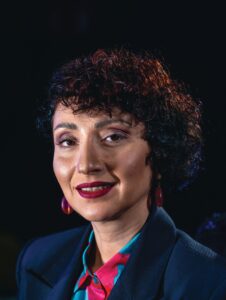
The International Publishers Association (IPA) places freedom of expression at the core of its global mandate, recognising it as the foundation upon which the publishing ecosystem and democratic societies stand. Here, Gvantsa Jobava, President, IPA shares more.
AABP: What inspired the IPA to create the Freedom of Expression Defender Award?
Gvantsa: The Prix Voltaire has become a prestigious prize recognising the bravest among us,those who risk their freedom or even their lives to publish the works of others. Not everyone operates in such high risk situations but the fight for freedom of expression is everywhere and we wanted to be able to recognise those great initiatives promoting the freedom of expression.
AABP: How does this new award differ from other IPA recognitions, such as the Prix Voltaire?
Gvantsa: The Prix Voltaire is only for publishers. This new award is for any individual, organisation or company from the book sector who has been exemplary in their work promoting or defending the freedom of expression, the freedom to publish or the freedom to read.
AABP: What are some of the most pressing threats to freedom of expression that you think the industry must confront today?
Gvantsa: At IPA, we are looking at the threats across the three freedoms I mentioned above. We see children’s books being targeted both in libraries and bookshops and this has knock on effects on publishers and authors. The biggest threats to freedom of expression are the persecution of authors by repressive regimes, the use of social media or administrative harassment or by powerful individuals or companies using ‘lawfare’ – the use of the legal system and process to intimidate into silence. The ultimate result of this is the worst possible outcome – self-censorship.
AABP: Around the world, freedom of expression faces new challenges — both political and digital. How do you see publishers’ role evolving in defending it?
 Gvantsa: Publishers have always had to adapt and censorship is evolving too. Before there were red lines and publishers in difficult environments knew what they could and couldn’t publish. Now the red lines have been replaced by grey zones and publishers are adapting to that. The core work hasn’t changed though – finding the best works, being committed to them and finding ways to bring them to readers. This is what makes publishing such a noble and inspirational profession.
AABP: Have you seen any encouraging examples of solidarity or resistance from within the publishing world?
Gvantsa: There are so many wonderful examples, which remind us that all is not lost. Look at the Freedom of Expression Week in Germany that creates lots of opportunities for national-level dialogue on what freedom of expression is. Look at the wonderful World Expression Forum, bringing together activists on freedom of expression from around the world to organise and resist. Our colleagues in Turkey are a constant inspiration in how they are resisting constant attacks on the freedom of expression. And look at how the book sector in the USA is standing up to restrictive laws, challenging them in court and fighting against censorship.And let’s look at Ukraine’s book market — their excellent publishers continue to produce outstanding books even under wartime conditions.
AABP: Do tell us about the award, who can be nominated & how? When will this award be awarded?
Gvantsa: The nominations process will open in January, with the award being delivered for the first time at the 2026 Frankfurt Book Fair. Publishers Associations can submit nominations for any individual, company, organisation, association or coalition, they feel has been exemplary in promoting the freedom of expression, the freedom to read and the freedom to publish. This isn’t a prize for authors or individual books, but an author who has dedicated themselves to speaking up for freedom of expression could qualify.
Our hope with this award is that it will act as a source of inspiration for others within the sector and show how the book sector has its role to play in securing freedom of expression in our societies and democracy in general.
AABP: What kind of individuals or organizations do you hope this award will spotlight in the coming years?
Gvantsa: I am hoping to be surprised by initiatives I couldn’t have imagined from countries I didn’t expect, from coalitions of book sector organisations who drove local conversations, who influenced local policies, pushed back on repressive laws. Standing up for freedom of expression can take many shapes and sizes and we hope to be able to celebrate them.
AABP: Looking ahead, what keeps you hopeful about the global fight for freedom of expression?
Gvantsa: My country has known the fight for freedom of expression in the not too distant past and we are having to do it again and so many people are standing up for their freedom. And I see what an exceptional role Georgian publishers and writers have in this struggle, how helpful they can be for society — how much their readers rely on them and how much they respect their resistance. All of the examples I mentioned earlier show that there are many others in other countries fighting for these freedoms and that can only give us hope.
AABP: What role can book fairs, festivals, and readers play in advancing the cause of freedom of expression?
Gvantsa: This is the beauty of the book sector and why we chose Frankfurt Book Fair as the host of the ceremony. The convening power of book fairs is unique, they are where we can organise ourselves, exchange experiences, understand the techniques of censorship and work out how to resist them. Festivals and readers are vital in our cause. The Utrecht Literary Festival held a readers March, with people holding banned books. These initiatives drive local conversations and raise awareness – losing these freedoms doesn’t just happen somewhere else.
AABP: Your message to the publishing world.
Gvantsa: The publishing world is an amazing thing. You do so much for our societies, making them laugh, educating them, sharing the latest scientific research, creating special moments for parents and children, creating the foundations for our democratic ability to understand information and misinformation. Thank you for everything you all do and let us keep doing it.
Comments are closed.